My husband isn’t really into many material things, aside from cars. So when it comes to birthdays and Christmas, unless I manage to find the spare change for a Porsche behind the sofa, I have to think outside the box when it comes to presents. And after nearly eight years together coming up with an original idea can sometimes feel like a bit of a challenge.
For his latest birthday, inspiration struck just in time for the big day as I thought to myself ‘What about making something?’ With a loose notion in mind, I turned to everyone’s best friend in a bind, Google.
After throwing in a selection of randomly generated keywords, I landed on the perfect idea – cosplaying as a Blacksmith for the day.
Intrigued? You should be, it ended up being an amazing day out…
Who we booked our experience with
There are only 792 registered Blacksmiths in England and even fewer offer experience days. With your options already whittled down, the different kinds of experiences also vary greatly between different Blacksmiths. Ultimately, you’re probably going to be swayed by the location of the experience day and our closest option was Ember Ironwork, located in Grassington.
The booking process was super simple, I contacted Richard who runs the Forge and explained it was a present for my husband. He sent a physical voucher the very next day through the post so Alex had something to open and all we had to do was email him to pick a date. This is where it was slightly trickier, with Richard booking weekend dates *months* in advance. In the end, we took annual leave so that we were able to enjoy the day sooner rather than later.
The main event
Any correspondence before the day went to my husband’s email meaning I turned up to the day completely in the dark. Luckily, aside from a willingness to give it a go and a sandwich, you don’t need to bring anything with you to fully immerse yourself in the day.
Located in the very heart of Grassington, Richard’s forge was two minutes away from the town’s main street. Boasting great views of the surrounding area, I have been daydreaming of upheaving my life to this beautiful town ever since.
When we arrived another group was already there for a sword-making session and Richard spent the day, successfully, guiding two separate experiences through their forging process.
Getting right into it
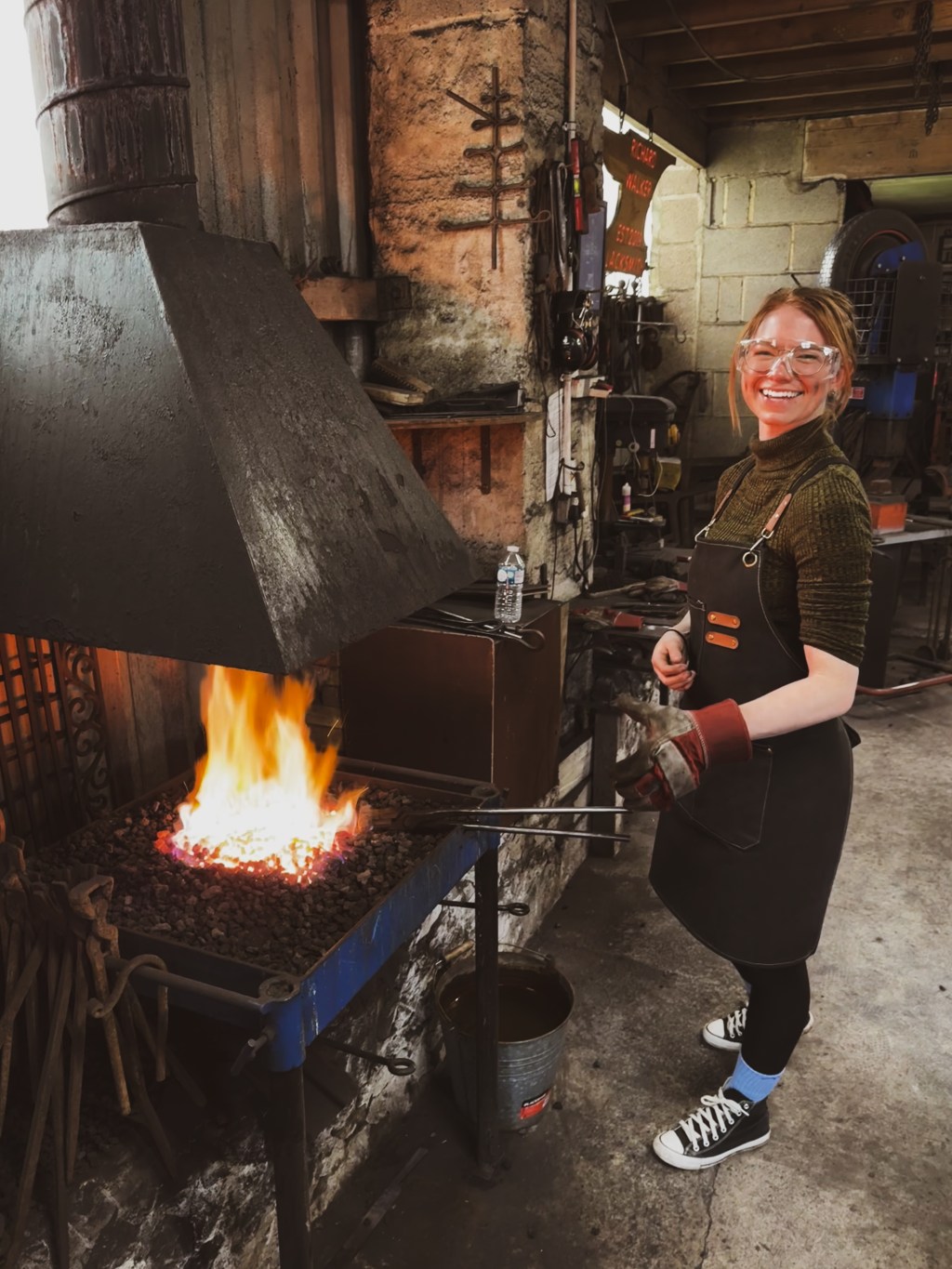
With a health and safety briefing out of the way, aprons and some welding gloves donned, we were ready to hit the ground running. Before we started hitting things with hammers Richard talked us through the Damascus slats available to us, each with their own unique pattern. Once we selected our metal, we headed to the fires and got to work.
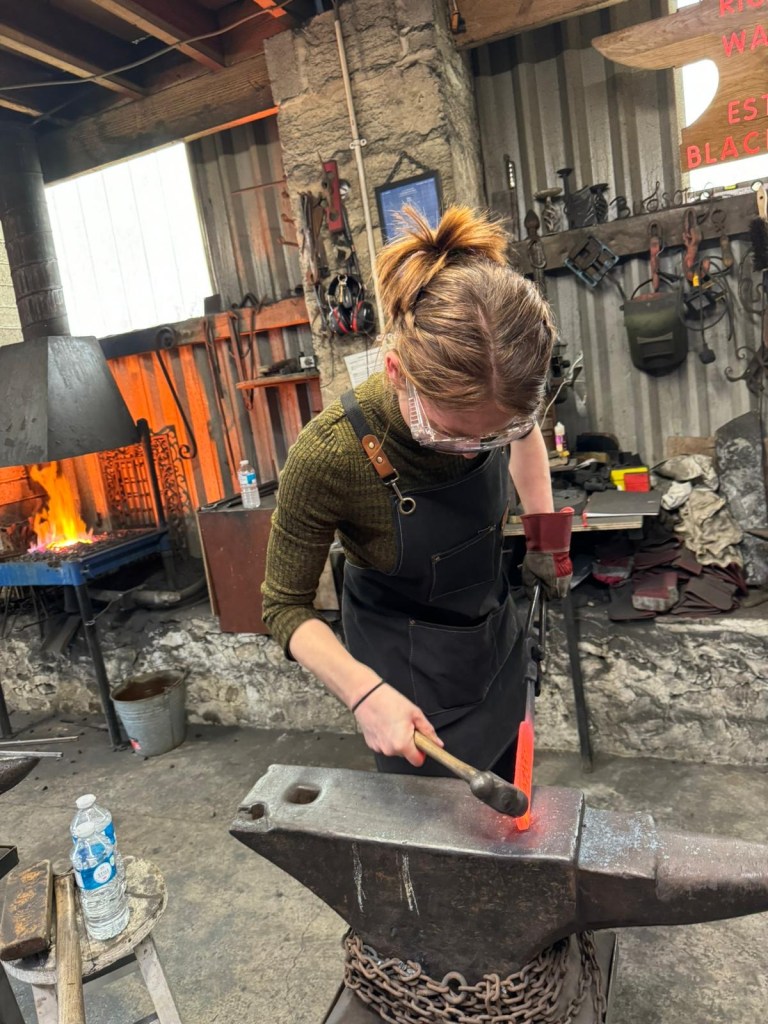
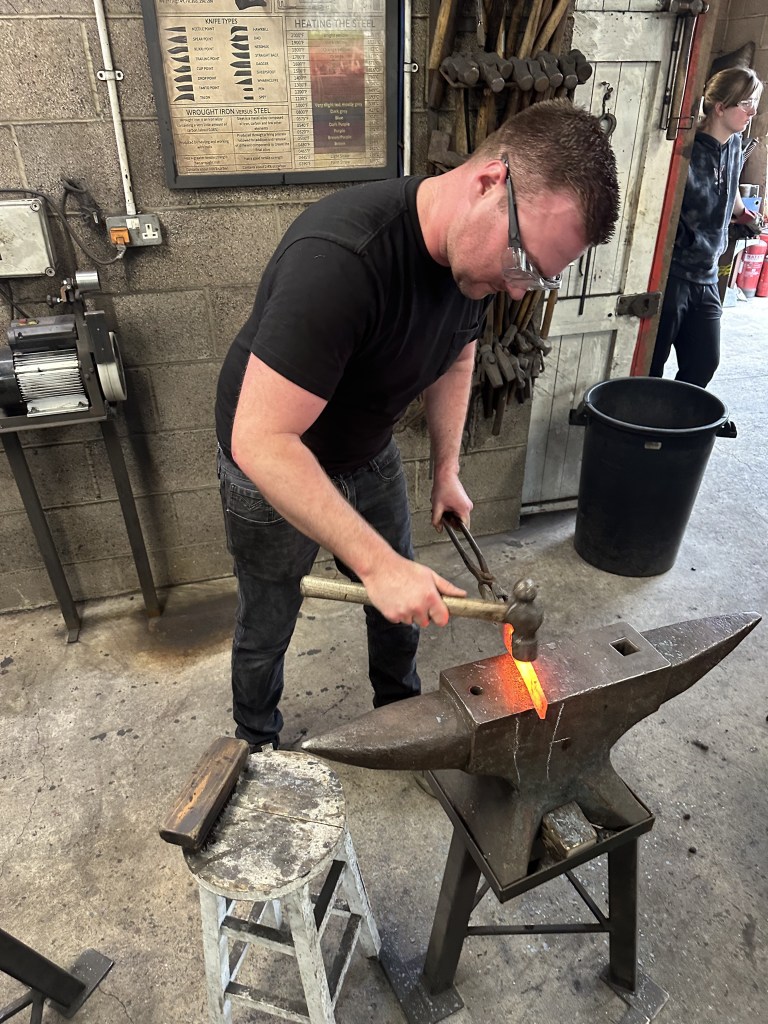
The first port of call was creating a very rough outline of a shape – namely creating a ridge that signified handle versus blade. I wasn’t expecting it to be easy but I probably was slightly naive about the physicality of actually shaping metal. This portion of the process involved placing our metal into a ‘molehill’ of coal in a fire that was easily 1500 degrees, waiting for the metal to burn yellow and removing it from the heat before it melted. While still scorching, you hit the metal into shape, repeatedly turning to prevent one part from becoming deformed or too thin. And I’m not exaggerating when I say this bit took hours!
Once we were happy with the shapes, Richard made sure the knives were as close to perfect as can be and tidied up any imperfections. Word to the warning, if you melt part of your knife, there’s not much Richard can do. Not that I know this from experience.
Let the sparks fly
Shapes defined, our knives went back into the fire one last time before we removed them and quickly dipped them vertically in oil. Left to cool for 15 minutes following this, we were then able to start sanding our knives down.
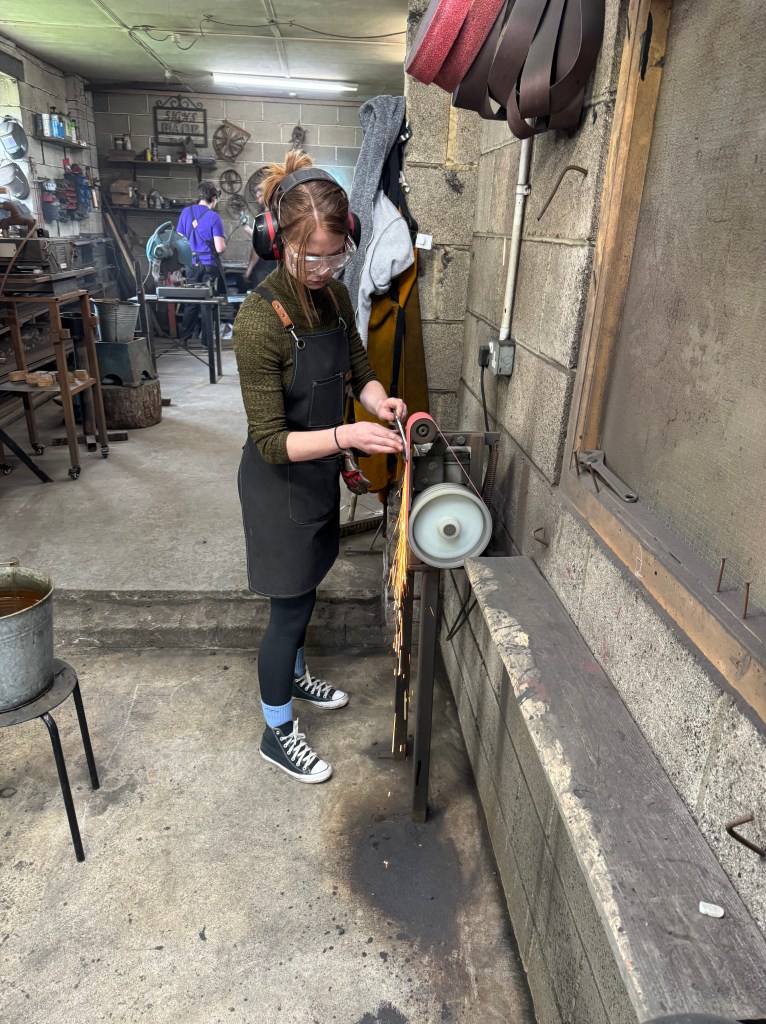
Using a belt sander, we further shaped, polished and sharpened our creations. Again this was not a speedy process and involved a lot of dumping the metal into buckets of water to remove the excess heat. This part of the day was one of my favourite bits, you really feel like you’re doing something cool when sparks are flying around you.
Once our knives were looking as knife-like as we could get them, all that was left to do was give them a quick clean before dipping them in acid. When we pulled them out, man did the Damascus patterns POP. Sadly, you then place the knives back in water and sand off the acid (understandably), which takes the dark stain right out of them. Richard advised we ‘coffee etch’ them at home, which involves sitting them in coffee overnight and worked fantastically.
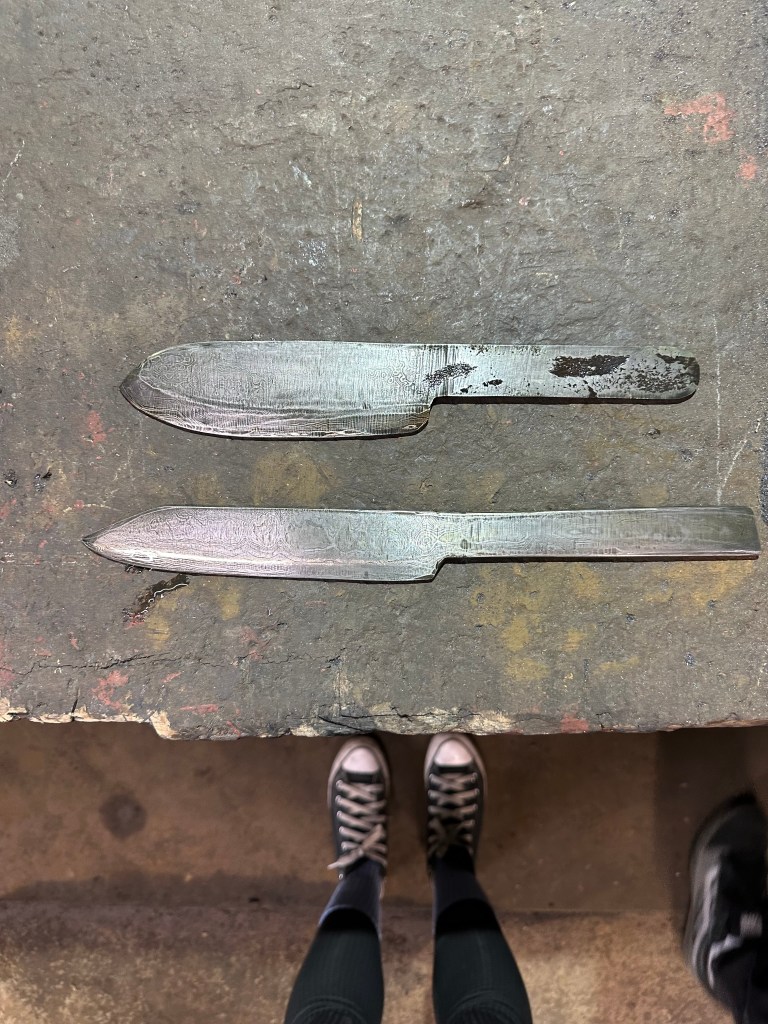
A great day out in Yorkshire
I can’t recommend this as an activity enough. My only caveat would be if you’re not really into any kind of manual labour, you might not love it! Richard leaves you to it and steps in as and when, so the hard work is on your shoulders to get through.
The day was long but in a really good way, the kind where you know you’ve earned a pint afterwards. We worked fairly solidly from 10am until 4pm, with a quick tea break somewhere in the middle.
The details
You can find all the information about Richard’s various classes here. He offers knife or sword-making and has different class lengths, from hours to days. Alongside making some sharp pointy things he also runs more comprehensive classes to teach you more Blacksmith skills.
All the costs are available on his site and vary from class to class. I paid £350 for myself and my husband to do the six-hour knife-making course and it was worth every penny. When you’re there and taking part you can see the real skill that goes into this craft, the time Richard puts into teaching and, of course, the cost of the materials has to be accounted for.
All in all, I can’t talk highly enough about the experience. It was so different to anything we’ve done before and something we’ll be talking about for a long time. It helps we have two cool new knives to add to the campervan now, too.


Leave a Reply