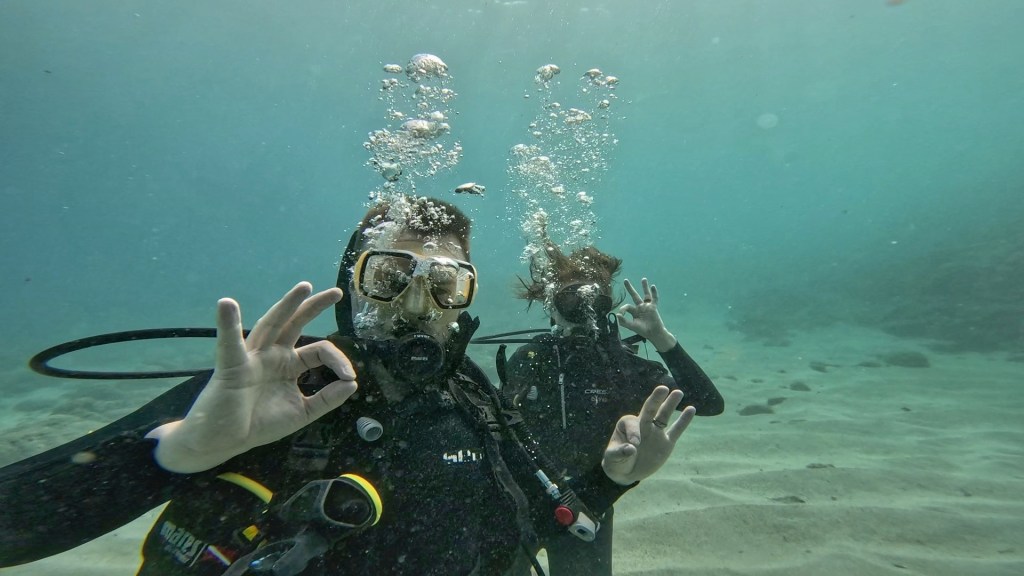
I love being in the water. Whether it be a bath hot enough to trick my nervous system into chilling the hell out, cannonballs into a pool or splashing around in the ocean: if there’s water, I want to be in it. Which is why it’s surprising it took me so long to try scuba diving and even more surprising that I didn’t take to it like a duck to water.
That being said, I loved the experience and plan on learning how to scuba properly, even though it didn’t come as naturally to me as I expected. I’ve read a lot of first-time articles which are all about the highs but less about the challenge of getting out of your head and into the moment.
So, if you’re curious about what it feels like to be the little mermaid for an hour, what I would do differently and if it’s worth the hype, this one’s for you.
Where we chose to scuba dive
There are some truly amazing places to scuba dive in the world and, I’ll be honest, we didn’t pick our location solely based on whether it was well known for the activity. We were on our honeymoon looking to make some memories and this fit the bill.
Our honeymoon was split into two destinations – La Reunion, more on this later, and Mauritius. Reunion has a bit of a reputation for shark attacks, which they are working hard to dispel. Even so, we thought it might not be the best place to don wetsuits and risk it all. Mauritius, while only a few hundred miles away, is seemingly safer for divers and home to the crystal clear waters we’ve all seen on Instagram, making this a perfect fit for our first foray ‘under the sea’.
Choosing the right company to scuba dive with
Once we had narrowed down our geographical location, we focused on our hotel rather than famous diving spots. While I wouldn’t recommend this everywhere, the island is small enough to travel around relatively easily and we rented a pick-up truck (if you’ve been, you know this is the only real way to travel) so venturing further afield for the activity wasn’t a deal breaker for us. However as luck would have it, or my exceptional planning, our hotel was a mere 10 minutes from our diving school of choice.
Just Diving Mauritius
There were a few different options we found online but ultimately we decided to go with Just Diving Mauritius. As complete novices, we based our choice on:
- Reviews: I filtered through various reviews, paying particular attention to other first-time divers experiences. They also had some nice tagged posts on their Instagram page – giving off an all-round positive feeling.
- Their website: Knowing what to look for can feel overwhelming when researching your first-time dive. However, it’s pretty easy to spot a good, reputable brand from a backstreet company. Just Diving’s site had an abundance of clear information and their diving qualifications were front and centre for everyone to see. They also had detailed pages on the different kinds of equipment they have, the various levels of diving they do and introductions to their qualified divers.
- Customer service: I got in touch with various schools and it was Gaëlle from Just Diving who stood out in a sea of responses. Communicating through WhatsApp, she explained the different options available to us and things we needed to do before the day, like health and safety forms. I base a lot of my life decisions, wrongly or rightly, on the first vibe I get from people and Gaëlle was ticking all the boxes.
Our scuba diving experience
I was quite nervous when we arrived at the scuba school. We were greeted by the lovely Gaëlle who was exactly what you’d expect from a woman who dives for a living. There were a couple of health and safety forms and disclaimers to fill in, which we did beforehand, and then it was time to start.
The training
We were provided with wetsuits, goggles, snorkels and flippers. Once dressed in our new kit, we headed to the training pool for our induction. Our instructor talked us through the correct way to wear your goggles, how to empty water out and, most importantly, the basics of breathing underwater.
With the fundamentals covered, it was time to test out our skills in the pool. At this point you’re attached to your gas canister and weights are added around your waist. Once we were all in, it was time to try breathing underwater. And this is where I started to struggle.
I don’t know whether it was anxiety or the fact I swim quite a lot, so my body associates being in a pool with holding my breath, but I couldn’t grasp breathing underwater. It felt extremely claustrophobic and unnatural. As with most things in life, once I was in my head, it was hard to get out.
The instructor was wonderful. He persisted when I wanted to quit and made me try again until we were at a more comfortable stage. Once I had mastered the very basic skill of not suffocating we practised emptying masks underwater, removing our mouthpiece and placing it back in our mouths.
That was it. 30 minutes of training and we were ‘ready’ to head out to sea…
Breathing underwater, for real
After a short walk along the beach, we reached the dive boat and set out to our diving point. The journey out was a lot of fun, great views, bouncy waves and a healthy dose of ‘what the f**k am I about to do’ adrenaline.
When it was time to dive, the crew assisted with setting up our equipment and doing all the safety checks. This is something more experienced divers do themselves but for a taster session the onus is on the company, not you. We walked to the edge of the boat and simply waddled off into the water before swimming to a guide rope.
Our instructor signalled it was time to begin our descent holding onto the rope. I managed to get about two metres down before I just stopped being able to breathe. My mistake? I looked up and my brain registered that we were underwater and said ‘Oh hell no.’
We went back to the surface and I was ready to call it a day but our instructor was adamant I had made it this far and should push on. This time he focused completely on me and signalled a breathing pattern for me to follow. We went 10 metres down and he stayed with me the entire way, monitoring my breathing and keeping me calm. And, boy, I’m glad he did.
Under the sea
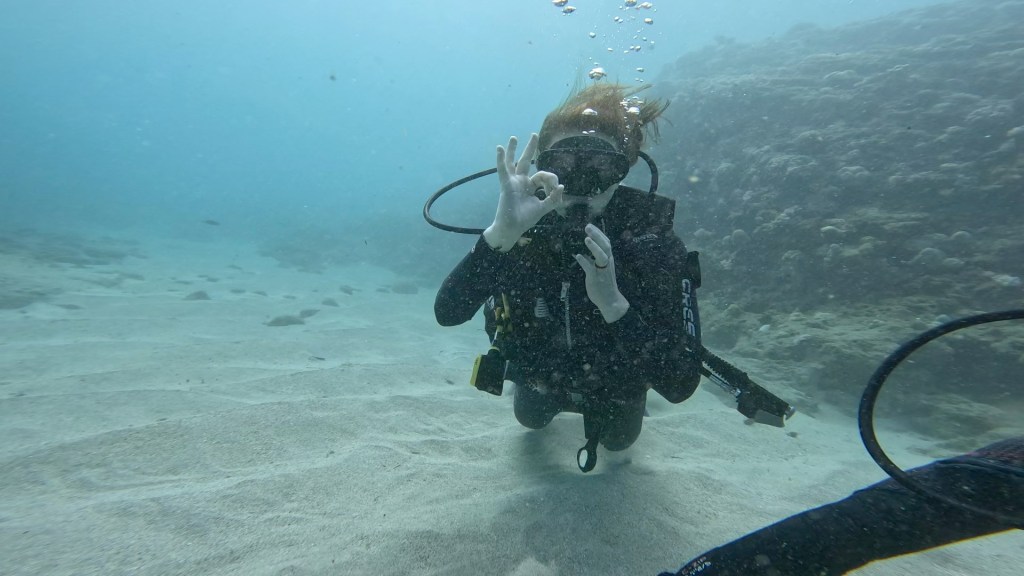
Once I was actually on the seabed it was like something in my brain switched. I didn’t completely calm down but I was able to control my breathing and turn off the alarm bells in my head telling me to panic. With so much beauty to focus on, it was hard to give my brain the attention it was craving.
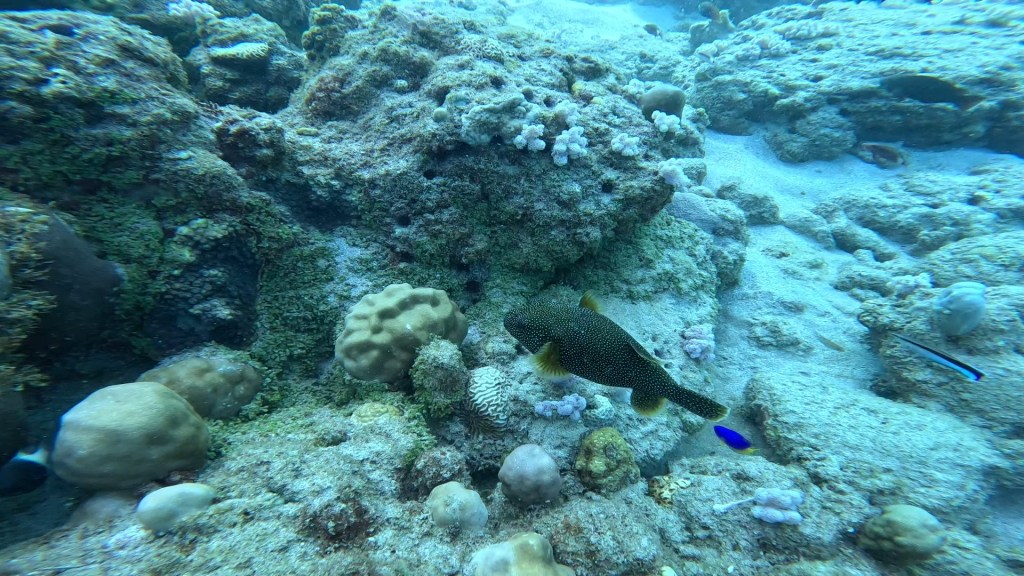
We dived for around 30 minutes and all I can say is ‘wow’. Swimming between schools of fish and seeing vibrant coral was one of the most freeing experiences of my life. You have no choice but to be completely present in the moment.
Our guide controlled the air in our suits and helped us move around the reef, allowing us to immerse ourselves fully in the activity. He also took pictures for us and directed us to areas of interest, letting us make the most of our time.
Returning to normality
When our time was up we returned to the guide rope and, this bit is key, slowly returned to the surface. People often worry about balancing their ear pressure on the way up and while we weren’t deep enough for this to be an issue we still approached our ascent with best practice in mind. Slowly we pushed up to the surface, pausing just below to ‘blow our ears’.
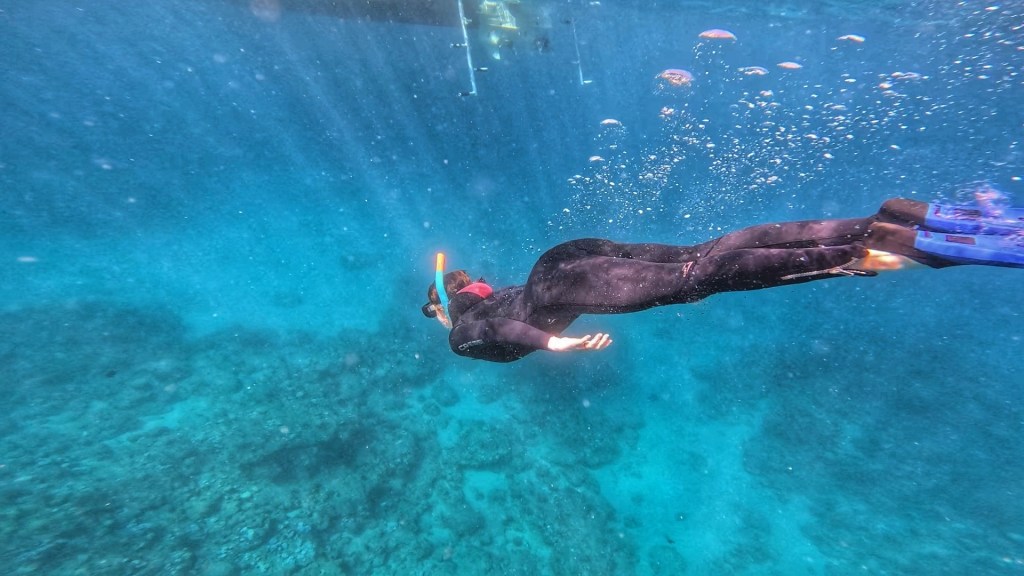
Back on the boat, the endorphins kicked in and it hit home how amazing it was that we can do such incredible things in this life. We had some time to kill waiting for the other divers so we snorkelled, drank some coffee and ate biscuits to replenish our blood sugar levels.
My top tips for your first-time scuba diving
It might sound like a bit of a mixed experience for me but I am so glad we tried scuba diving on our honeymoon. It was one of the most breathtaking (literally) things I have ever done and I will treasure the memory forever. However, I would have loved to have been slightly more in control of my breathing and would recommend a few pointers for anyone looking to try scuba diving for the first time:
- Do it somewhere where they are fluent in your native language: If you’re like me, you want to really understand something before you do it. We got by and I knew everything I needed to be safe but I would have preferred to do a more intensive introduction where I could ask more questions and fully understand the mechanics behind our equipment.
- Go to a local pool and practice the techniques more: Similar to the above, I would ideally have liked longer in a pool or controlled environment to practise breathing skills. I didn’t have enough time for my brain to adapt to breathing underwater and for it to understand ‘Laura, this is okay!’
- Breathe: D’uh! But, seriously, just take a minute. I panicked and focused too much on the fact I was underwater and somehow, after 29 years of breathing without a thought, I forgot how to do it. And once you panic 10 metres down, there’s not a lot you can do to calm down. If you’re nervous, focus on the diver who is with you and breathe with them – it works!
- Just do it: Despite all the above, it’s one of the best things I have ever done and we’re looking to get properly trained in it. I have no doubt when I try again, I’ll panic but I don’t care. The feeling of being free under the water is almost indescribable. It doesn’t matter how long it takes me or how many panic attacks I have to have, you can bet you’ll find me in a wetsuit lugging an oxygen tank on a beach near you soon.
So, what are you waiting for? If you’ve ever even considered, however fleetingly, scuba diving – just bloomin’ do it.


Leave a Reply